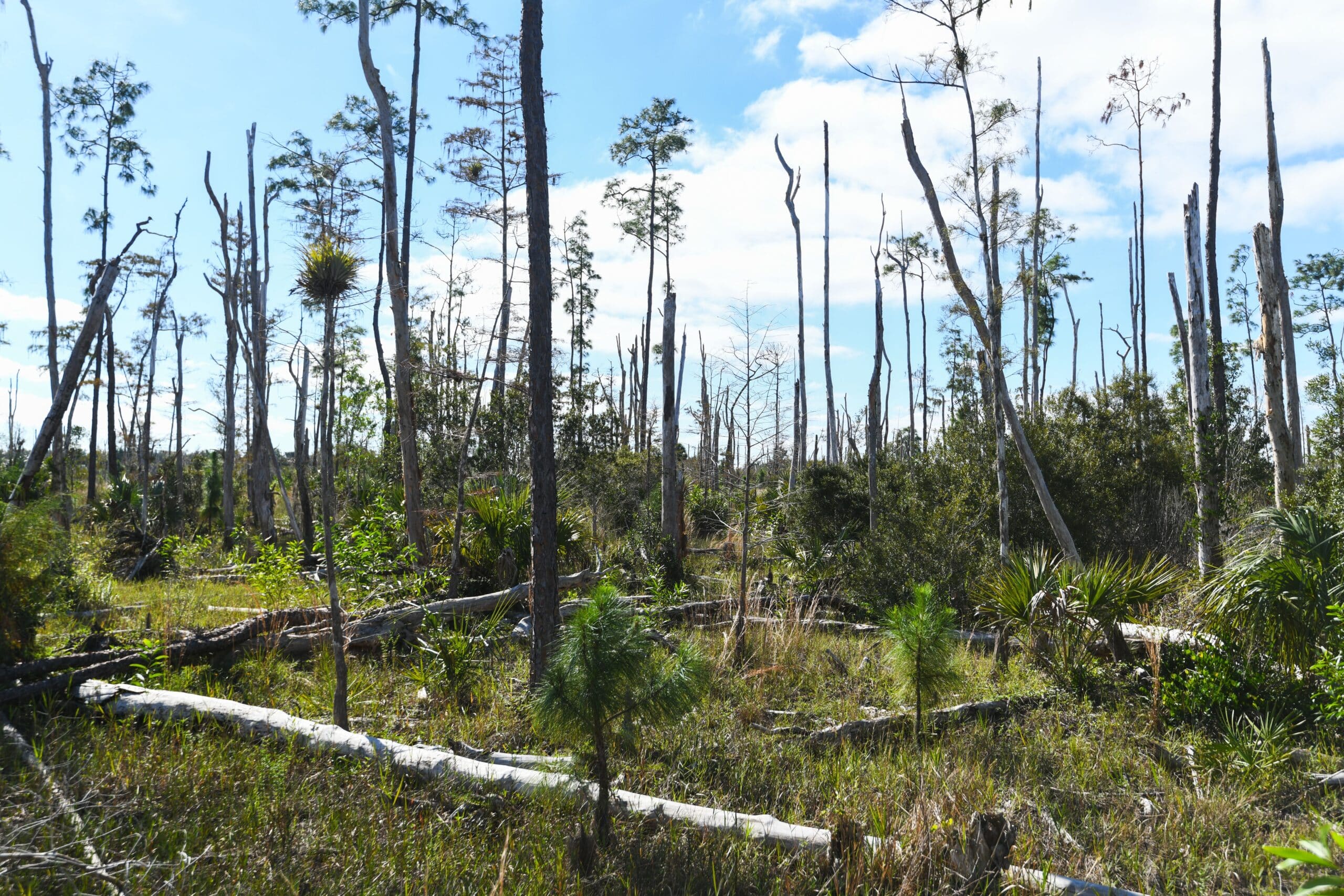
Property owners across East Tennessee often face steep terrain, dense vegetation, and unpredictable runoff when planning land clearing projects. All Out Services, based in Erwin, works with landowners throughout the region to help them understand how clearing decisions affect safety, drainage, and long-term usability.
Let’s have a look at how professional clearing works in East Tennessee and what property owners should know before any equipment arrives.
Why East Tennessee Conditions Shape Every Land Clearing Plan
East Tennessee landscapes combine hillsides, shallow soils, rock layers, and fast-moving stormwater. These conditions demand careful planning before crews remove vegetation. Local experts assess slopes, access routes, and water flow patterns to avoid erosion and unsafe working conditions.
Every project should kick off by clearly defining your end goal. Homesites, driveways, pastures, trails, and fence lines all require different finishes. Selecting the right land clearing techniques will help make sure your land supports its intended use without unnecessary rework down the road. Proper planning also protects the surrounding property and minimizes the risk of adverse impacts.
How Forestry Mulching Works on Slopes and Uneven Ground
Forestry mulching uses tracked machines equipped with rotating mulching heads to grind brush and trees directly into the ground cover. This method handles undergrowth and small to medium-sized trees while leaving mulch in place.
Mulching limits soil exposure, which helps reduce erosion on sloped ground. The mulch layer also slows runoff and protects topsoil during heavy rain. Property owners often choose this method for trails, view corridors, and access improvements.
Mulching does leave stumps and root systems underground. Because of that, it does not suit immediate construction areas. Still, it remains one of the most effective options for reclaiming overgrown land in East Tennessee.
Where Brush and Tree Removal Create Cleaner Finishes
Land clearing projects often require the complete removal of existing vegetation and debris.
How Targeted Brush Removal Improves Access
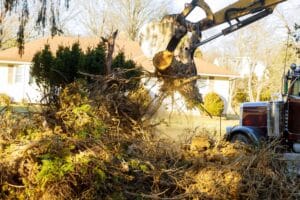
Selective brush and tree removal focuses on cutting unwanted vegetation while preserving desirable trees. Crews remove vines, saplings, and invasive species to open sightlines and reduce hazards.
This approach works well near property lines, streams, or structures where precision matters. It allows landowners to maintain shade and aesthetics while improving usability.
When Full Tree Removal Supports Development
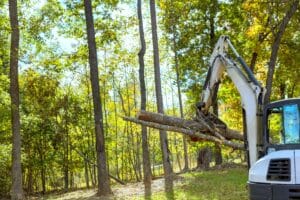
Some projects require complete tree removal to accommodate buildings or infrastructure. Crews safely remove trees, haul away debris, and prepare the area for grading. Excavating roots reduces future settling and supports construction and utility installations.
Tree removal often pairs with grading and compaction to create build-ready surfaces.
How Mechanical Clearing Supports Larger Projects
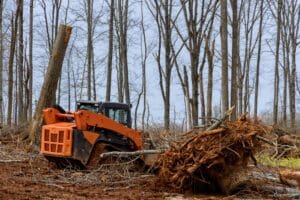
Mechanical land clearing uses heavy machinery to push, cut, and pile vegetation. Dozers, excavators, and compact track loaders handle dense brush and larger trees efficiently. Heavy equipment is usually suitable for properties that require significant transformation and site preparation.
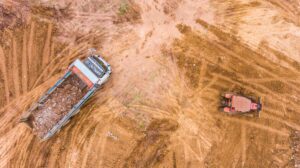
Mechanical clearing allows faster, cleaner foundation work for roads, pads, and utilities. Of course, it disturbs the soil more than mulching. Professionals carefully manage the impact of heavy equipment use to reduce erosion risks while preparing the land for safe drainage and construction.
What Property Safety Guidelines Matter Before Work Begins
Professional crews follow strict property safety guidelines to protect people and structures. Property owners also play a role before work starts.
Key preparation steps to coordinate with your land clearing professional include:
- Calling 811 to locate underground utilities
- Identifying wells, septic systems, and drainage lines
- Marking boundaries and trees to preserve
- Securing pets and keeping people away from work zones
Land clearing involves moving machinery, falling debris, and uneven ground. Clear communication improves safety for everyone involved.
Why Heavy Equipment Operation Requires Experience
Heavy equipment operation on East Tennessee terrain demands training and judgment. Operators manage machine stability on slopes, avoid soft ground, and watch for overhead hazards. Crews also account for hidden risks such as wire, scrap metal, and unstable trees.
Experienced operators adjust methods based on weather and ground conditions. When crews delay work due to rain or access concerns, that decision protects both property and safety.
How Site Preparation Makes Land Truly Usable
Clearing vegetation does not automatically make land ready for use. Site preparation completes the process by addressing drainage, grading, and stabilization.
Land clearing professionals shape swales and ditches to guide water safely. They install erosion controls where needed and prepare surfaces for driveways or building pads. Proper preparation prevents washouts and costly repairs later.
East Tennessee rainfall patterns demand attention to drainage from the start. Expert site preparation sets the stage for successful construction or extensive improvements.
Get Professional Land Clearing Guidance From All Out Services in East Tennessee
Land clearing decisions shape how your property will function for decades to come. When you need experienced guidance on land clearing, forestry mulching, or site preparation, All Out Services provides knowledgeable support across East Tennessee.
Call (423) 427-4812 or contact us online to get a free quote and to discuss a safe, effective clearing strategy.